
now loading...
“You can't bet against the United States right now,” affirms Dilhan Pillay Sandrasegara. “It is still a significant part of our allocation [that] goes to the US.”
The executive director and CEO of Temasek Holdings, the sovereign wealth fund of Singapore with US$324 billion of assets under management, Pillay also shares at a panel discussion at the recent Abu Dhabi Finance Week that Temasek is also finding “good companies in Europe that are globally competitive”.
On the other hand, Mubadala Investment Co, the sovereign wealth fund of Abu Dhabi, is actively scaling up its investments into Asia. “China is the big piece and the centerpiece of our portfolio when it comes to Asia,” points out Mohamed Albadr, executive director and head of Asia. “That's a market where we can see that there's going to be a lot of structural reform that’s going to take place.”
Asset allocation
The contrast in investment priorities reflects differing starting points. With the changing investment landscape accelerating on the back of geopolitics, supply chain shifts, and the advent of emerging technologies, both funds are ultimately aiming for greater asset diversification.
In the case of Temasek, its investment shift to the West started about five years ago. A decade ago, its portfolio exposure to China was at about 20%. It is now at 11% with North America’s share increasing from 7% to 19% during that period.
On the other hand, Mubadala’s North America exposure is at 40% today. “Asia is probably about 12% to 13% of the US$330 billion of assets under management,” Albadr indicates. “In the next 5 to 10 years, we would love to see that double.”
Pillay emphasizes that Temasek continues to allocate to China and India. “The Chinese market has done well in the last 16 months, and I think it will continue to do well in the new year,” he anticipates. “We can see the backdrop from the IPOs and the flows that go into China – from outside China and from within China.”
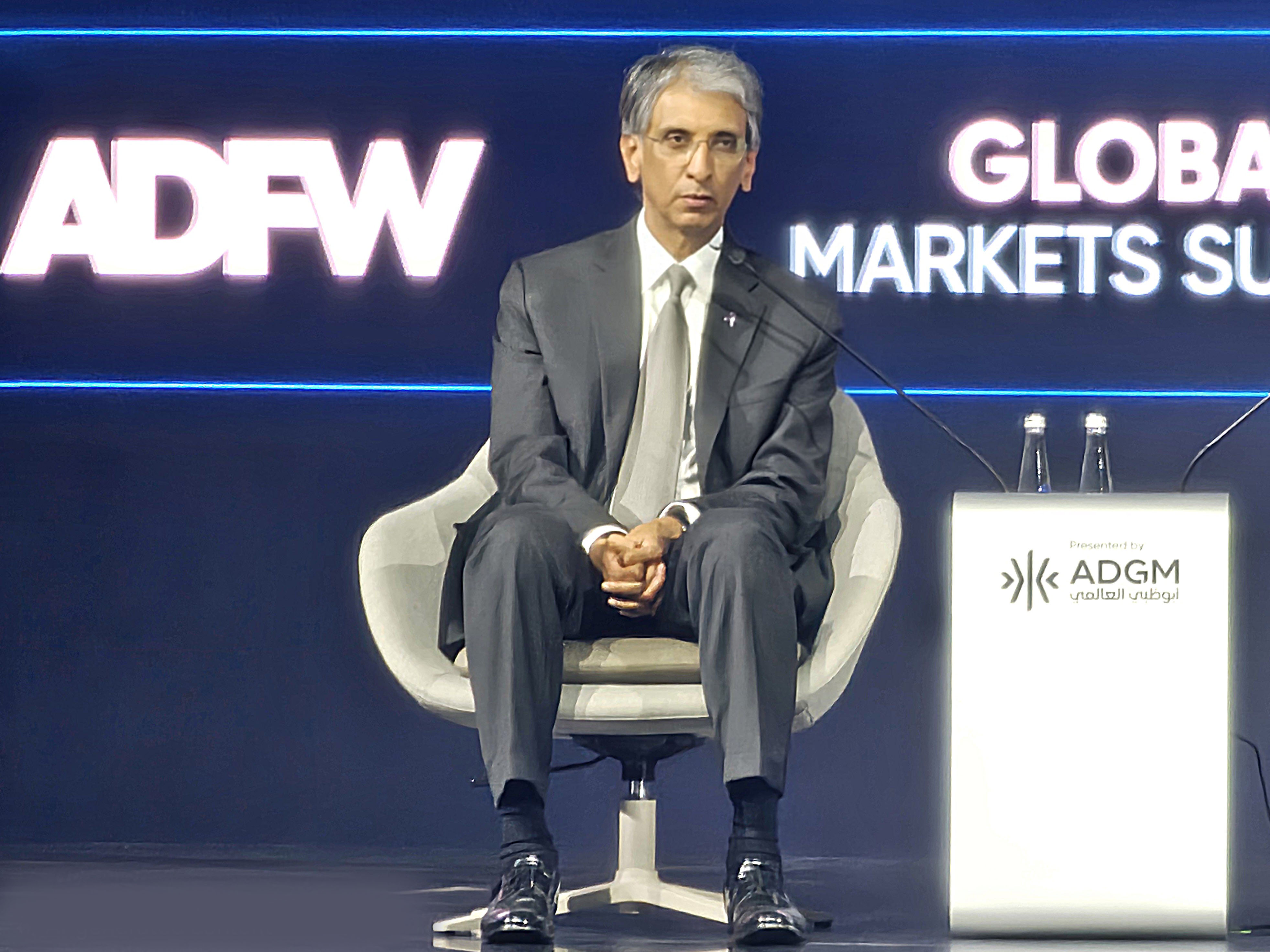 Dilhan Pillay Sandrasegara, executive director and CEO of Temasek Holdings.
He also forecasts that India, with its GDP growth rate of over 8%, will do better in 2026. “The equity market is a little bit wobbly this year, understandably because of concerns over the US-India trade issues. But I think they will be sorted out next year.”
For Mubadala’s Albadr, the paradigm shift underway in Asia presents interesting opportunities. “From the demographic perspective, there's a shift that's taking place, whether it's in India, in Southeast Asia, and also in places like China, Japan and Korea. Being able to play within those nuances is a very interesting idea.”
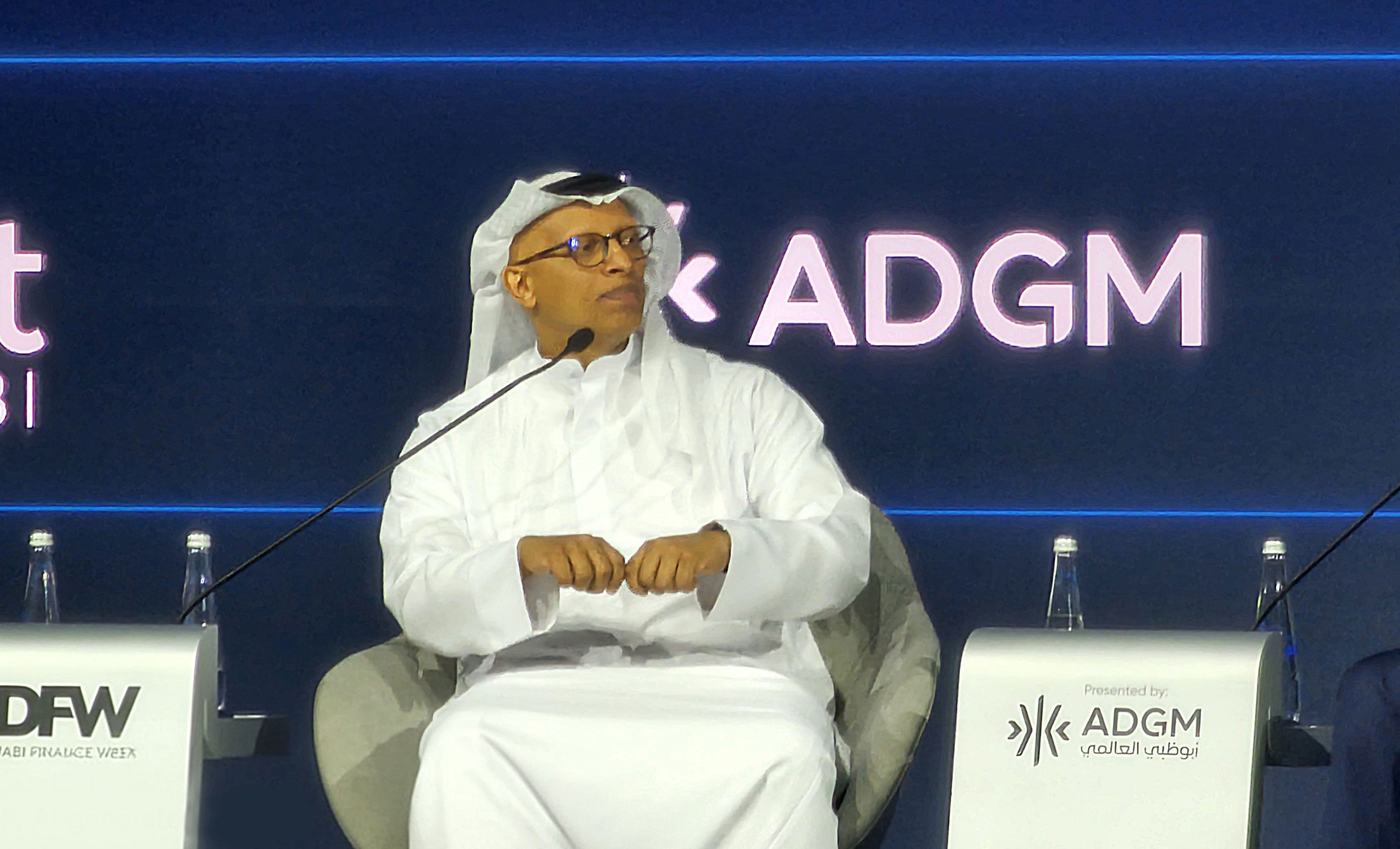 Mohamed Albadr, executive director and head of Asia, Mubadala Investment Co.
Digitalization underway in the region is another area that appeals from an investing point of view. “It is completely underpenetrated within Asia itself,” he explains. “This is a huge tsunami wave that I think is going to come in very rapidly and where we think there's a lot of great opportunities at the same time.”
The other aspect that appeals to him is on the consumption side. “You can look at that from a multi-layered perspective – whether it's high-end, the broader sales to the middle class, or to the lower income areas,” he explains.
“You're seeing different upgrades and where you're seeing shifts in economies and GDP per capita taking or breaking certain layers like the US$7,000 mark or the US$10,000 mark. You see clear trends shifting in the way that people are spending their capital on a day-to-day basis. For us, this is a very unique positioning that's taking place and where we can see there's a good amount of growth.”
FX worries
Of late, investing in the US for Temasek’s Pillay comes with FX concerns given the weakness in the US dollar, which affects the fund’s return. “What we have been doing in the last five months is to actually hedge our US dollar exposure,” he reveals. “But because the hedge cost has gone up to about 2.5% to 2.6%, we now have brought the hedges down.”
The question being asked, he continues, is what happens if the hedge cost continues to go up, and “whether we therefore reorient our allocation towards higher-yielding portfolios to offset against the hedge cost and to ensure the [fund’s] net returns. That’s what we are thinking about”.
One area that is in consideration, Pillay says, is allocation away from equities, which represent 95% of Temasek’s portfolio. “I actually think that if you're focused on how to invest in private credit or core-plus infrastructure as diversifier against equities, you can end up in a good risk-reward place,” he relates. With private credit, “you are further up the cap[ital] stack for the return, and the same for core-plus infrastructure”, which produces stable earnings.
However, Pillay stresses the importance of adequate returns. “The one thing investors should be thinking about is the balance between liquidity and illiquidity and whether you get paid for the premium that you need with illiquidity.”
Significant GDP
In Asia, Albadr of Mubadala names India, China, Japan, and South Korea as the markets that will dominate the fund’s activity in the coming years – “markets with significant amounts of GDP that’s strong enough and a private equity market that’s mature with exit possibilities, whether through strategic [sale] or through the capital markets”.
But for Mubadala, China is the fund’s most consequential market going forward. The firm has an office in Beijing with 35 staff members and a joint venture office in Hong Kong.
With China’s five-year plan being implemented between 2026 and 2030, he is watching how the plan impacts the underlying sectors that the government is pushing and where public-private collaboration is taking place to create the growth over the next five years.
“This for us as investors, we take a strong lens – laser focus – to figure out those mega trends that are happening and start looking through the value chain of those opportunities and spotting those ones and being able to act on them,” he adds.
Albadr shares that Mubadala will deploy a multi-strategy approach to capture opportunities in Asia, such as through private equity, through infrastructure and real estate, or through its endowment model with the Abu Dhabi Investment Council.
From a portfolio perspective, he says Mubadala is consistently thinking about Asia, and how the fund is able to “diversify from a jurisdictional perspective”.